Personalization Strategy POC for Gap Inc.
Project Overview
As part of a high-velocity, three-pronged personalization initiative, I was tasked with defining a "North Star" vision for the Old Navy mobile app. The goal was to move beyond static e-commerce grids toward a data-driven, tailored experience.
Working within a compressed two-week sprint, I designed and prototyped a full end-to-end journey, focusing on the Home Screen, Category Pages, and Wishlist systems, to provide the research team with a high-fidelity artifact for rapid user validation.
The Strategic Goal: Increase Customer Lifetime Value (LTV) by reducing "choice paralysis" and rewarding brand loyalty through personalized utility.
Role: Lead UX Designer | Timeline: 2-Week Sprint | Platform: iOS/Android (Old Navy)
Give it a try!
The Features
1. Onboarding: Value-First Data Collection
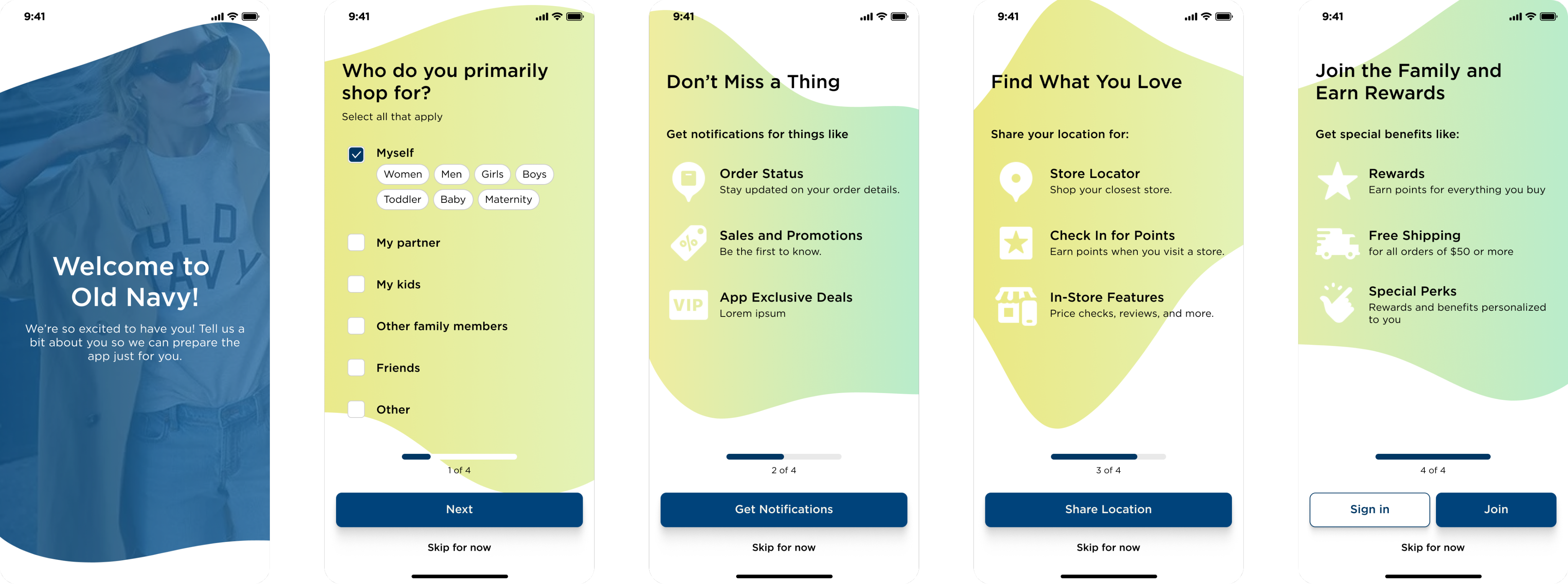
Traditional onboarding often creates a "bounce risk" by forcing account creation too early. My approach prioritized progressive disclosure.
- The Strategy: Captured high-signal data (shopping intent, size, style preferences) immediately but made account creation optional.
- The Senior Touch: By allowing users to "Skip" while still capturing local preferences, we reduced friction while ensuring the "Day 1" experience remained personalized even for guest users.
2. The Dynamic Home Hub
The Home Screen was reimagined as a Personal Concierge rather than a digital circular.
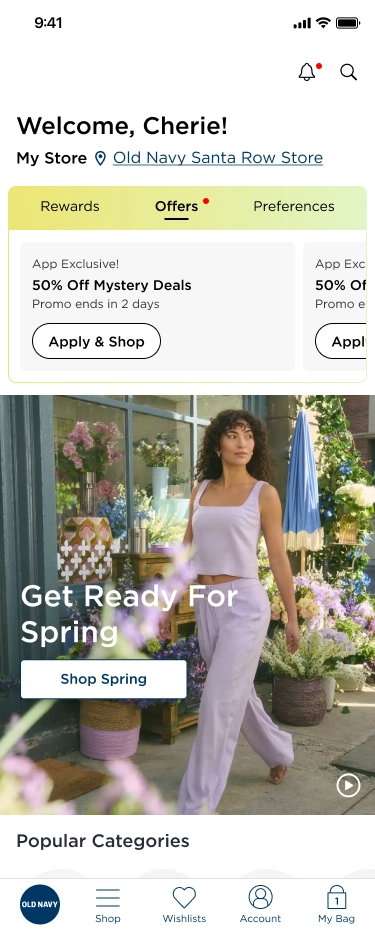
Integrated Utility
Unified Loyalty Rewards, active promos, and "Store-Aware" inventory into a single top-level module to reduce "pogo-sticking" between tabs.
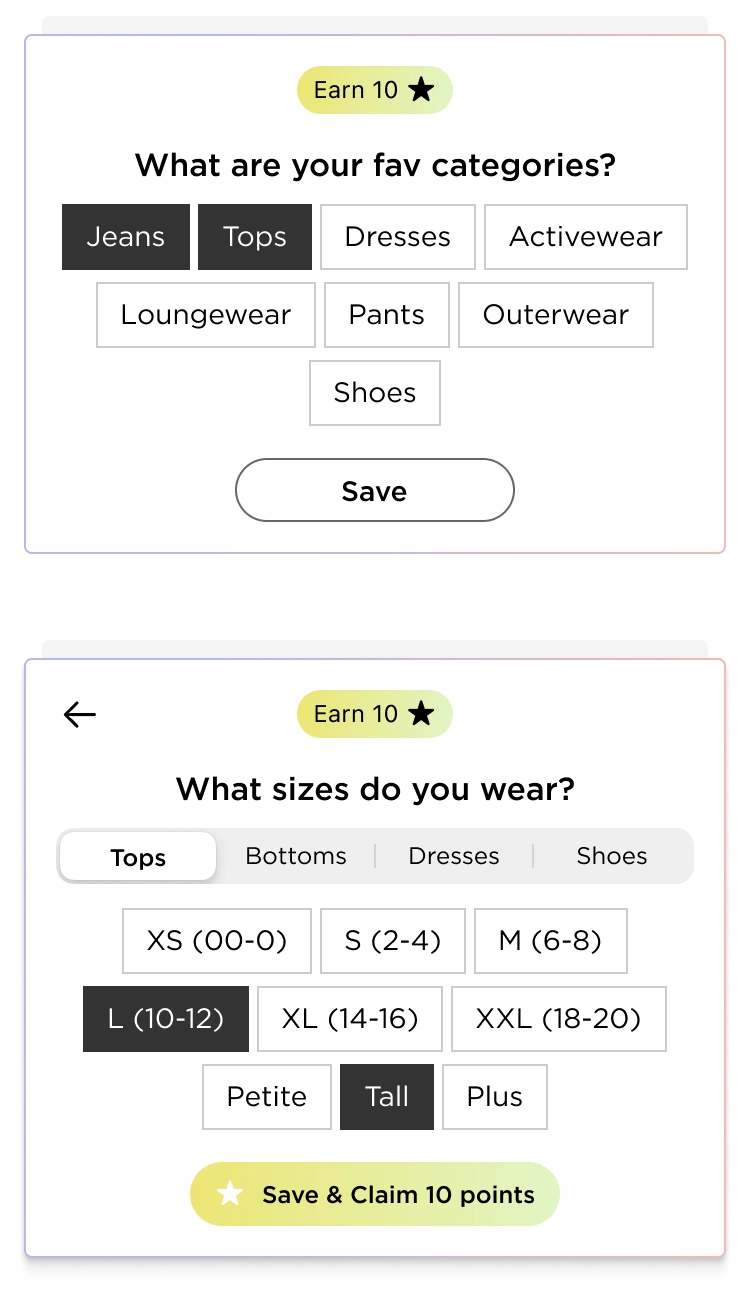
Gamified Data Acquisition
Introduced lightweight prompts that exchange user data (like sizing) for loyalty points, turning a "form-filling" chore into a value-exchange.
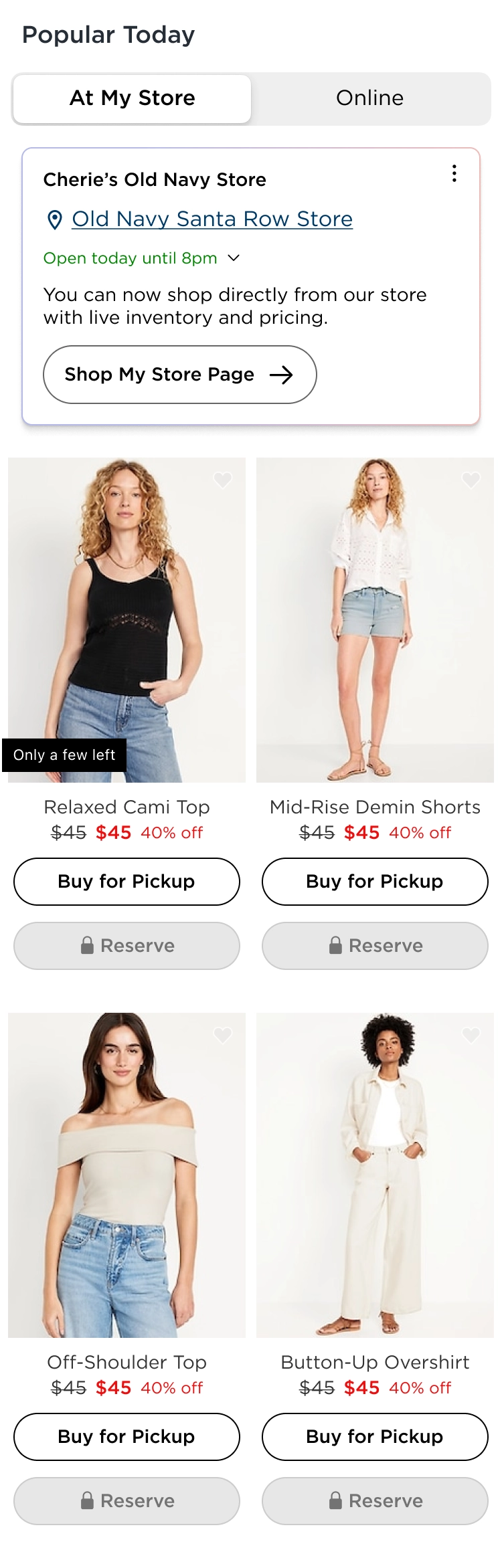
O2O (Online-to-Offline) Strategy
Designed a "Reserve in Store" feature as an exclusive, unlockable perk to drive foot traffic and bridge the gap between digital browsing and physical conversion.
3. 'Curated for You' & The Feedback Loop
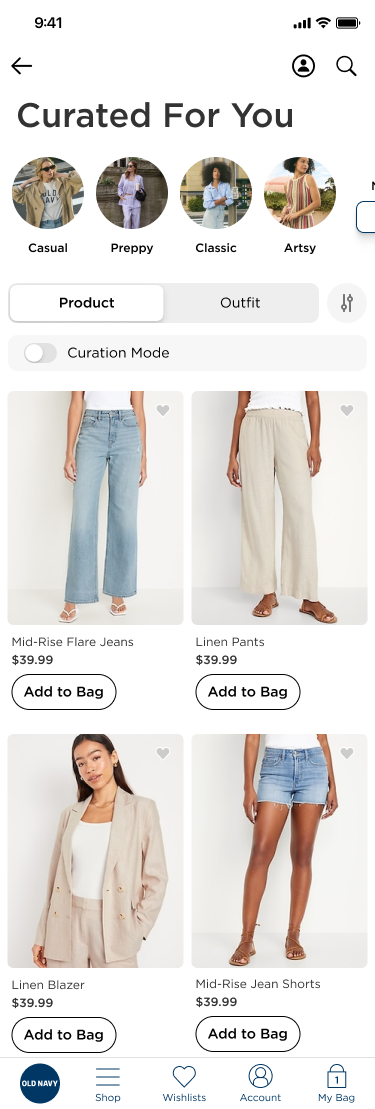
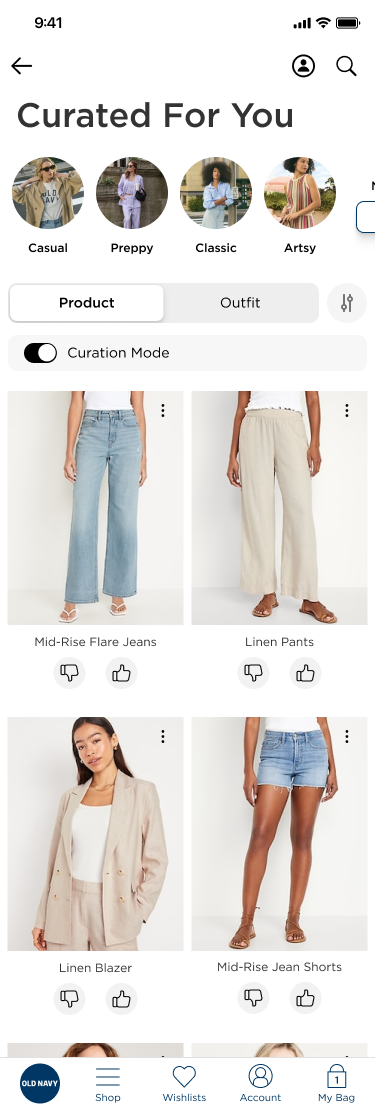
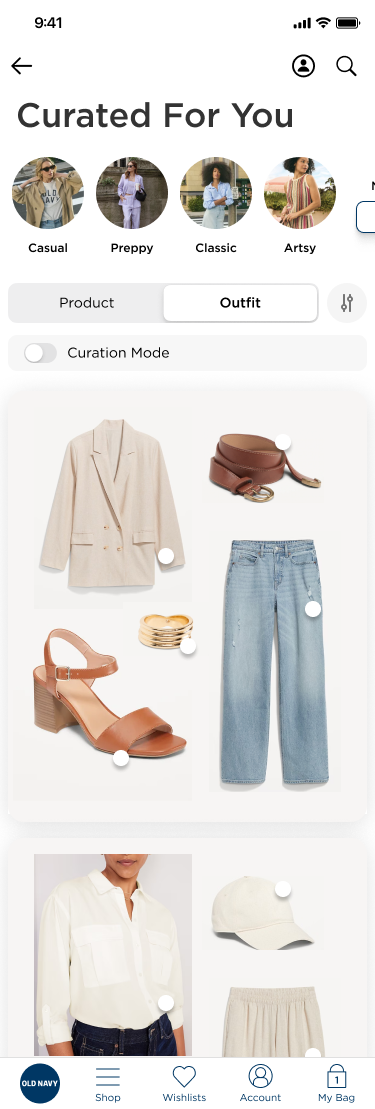
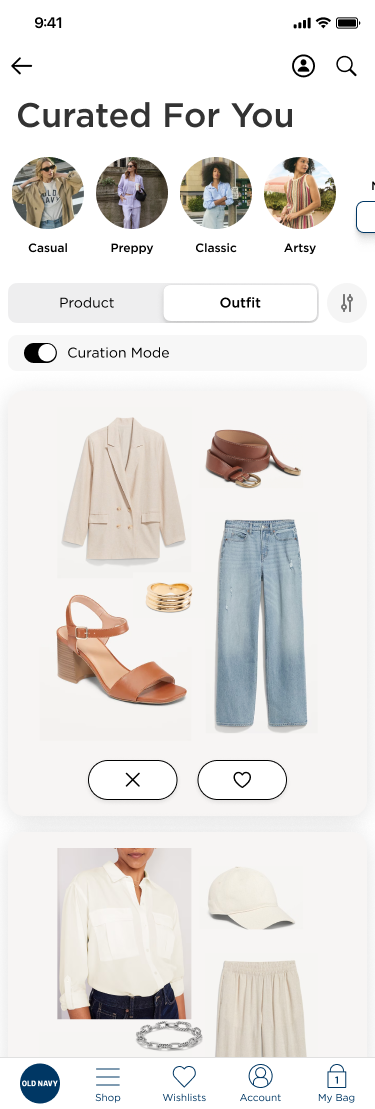
To solve the "Cold Start" problem in recommendations, I introduced two distinct interaction models for the Category Page:
Curation Mode (The Feedback Loop)
A UI toggle that replaces "Add to Bag" with "Thumbs Up/Down." This explicitly invites users to train the algorithm, giving them a sense of agency over their recommendations.
Outfit View (Inspiration-Led)
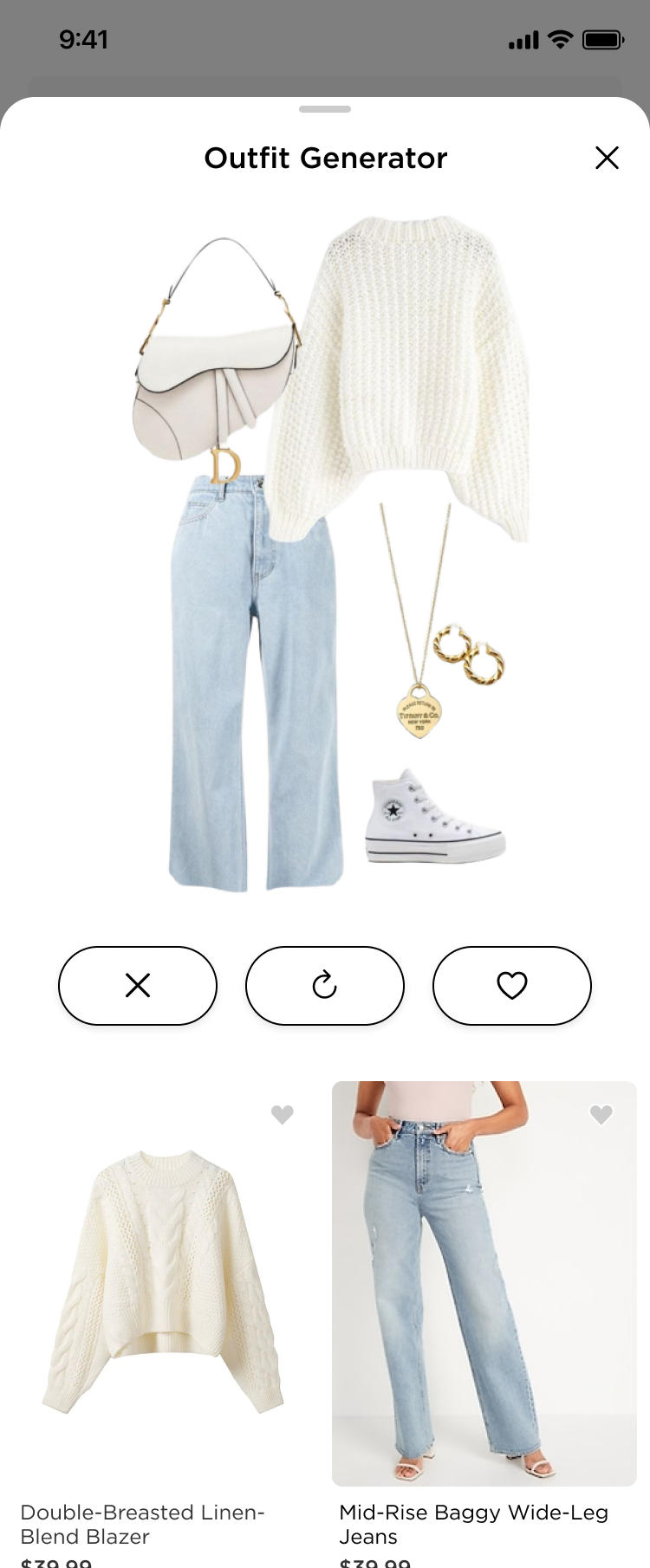
Shifting from individual SKUs to AI-generated "looks." This leverages social-media mental models (hotspots and scrollable feeds) to increase Average Order Value (AOV) through bundled styling.
4. High-Intent PDP Optimization
For users coming from curated flows, the standard Product Detail Page (PDP) is often too dense. I designed a Truncated PDP to accelerate the path to purchase:
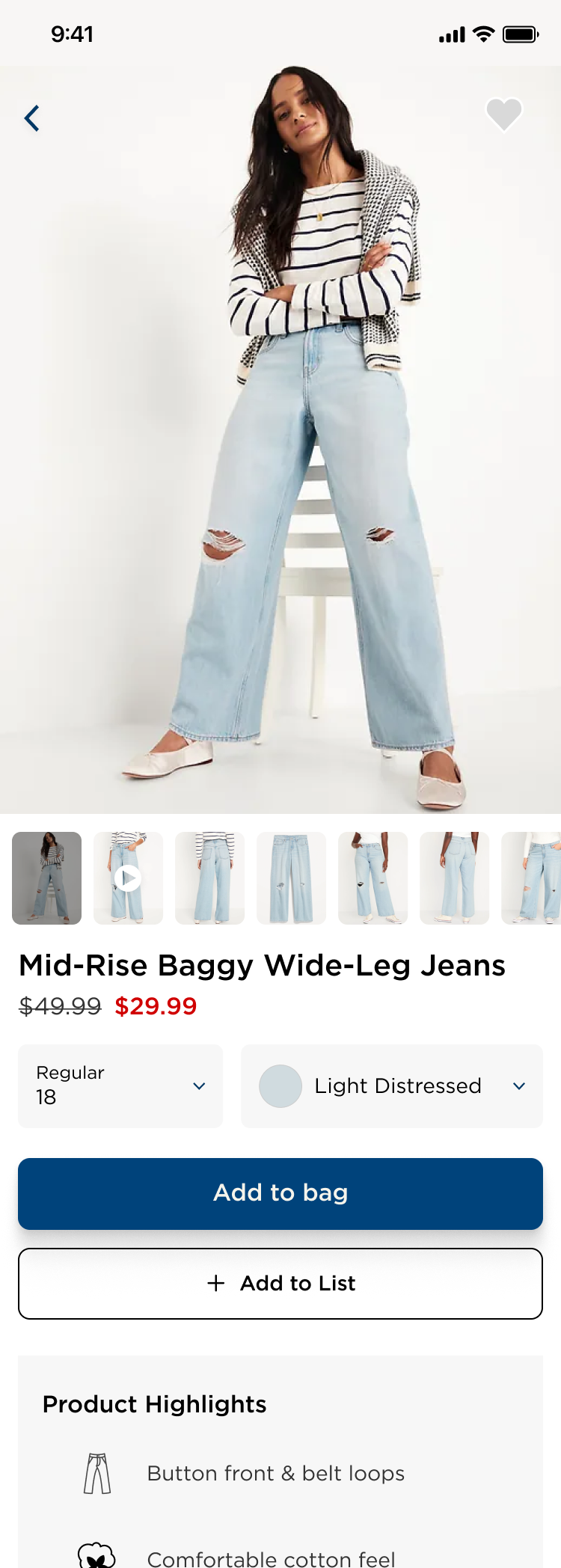
Decision Defaults
Sizing is pre-selected based on onboarding data, removing a critical click in the checkout funnel.
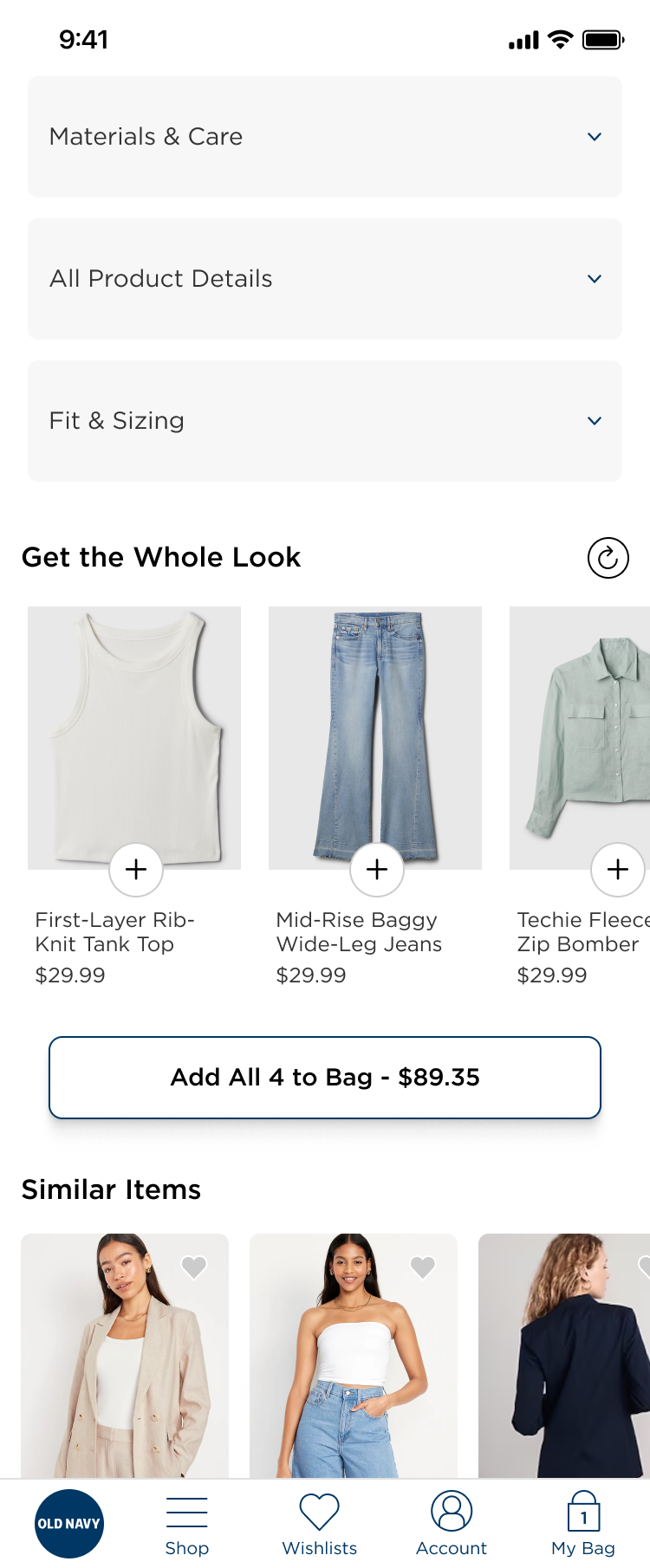
One-Tap Bundling
A "Shop the Full Look" widget allows users to add an entire curated outfit to their bag instantly, reducing the friction of manual multi-item discovery.
5. Retention via Engagement Loops (Lists)
For users coming from curated flows, the standard Product Detail Page (PDP) is often too dense. I designed a Truncated PDP to accelerate the path to purchase:
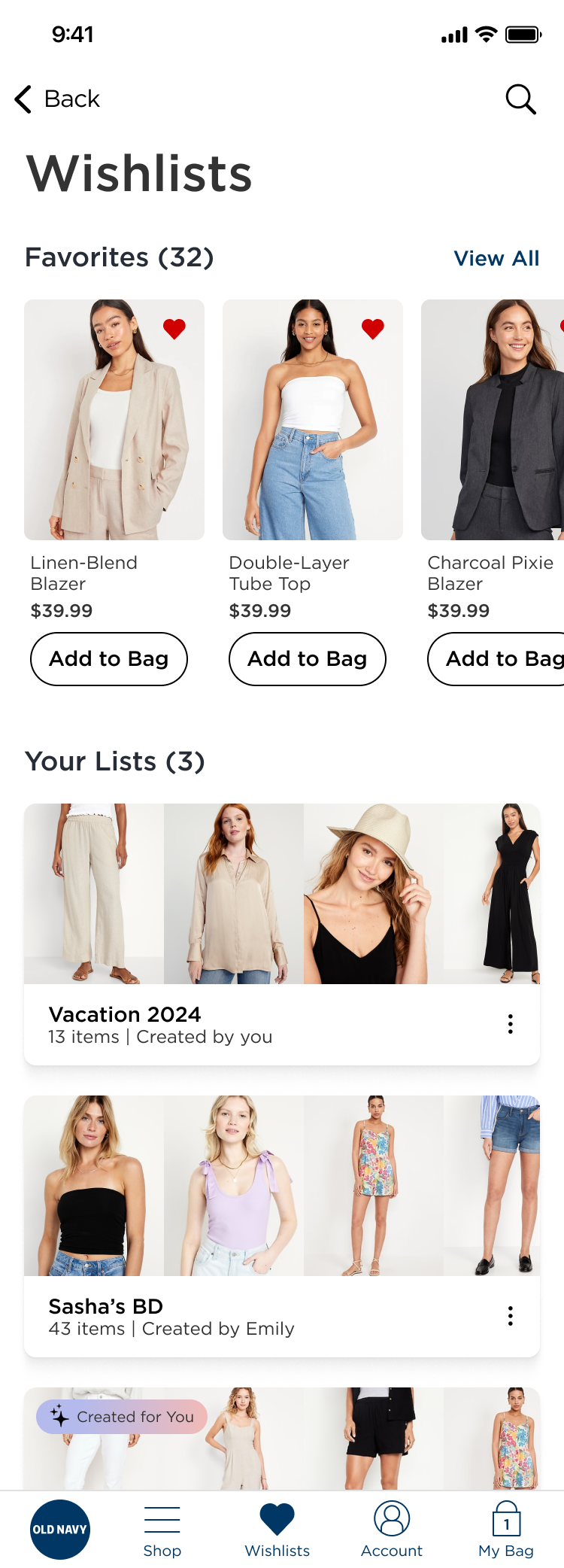
Contextual Lists
Enabled themed organization (e.g., "Vacation Fits") to capture user intent.
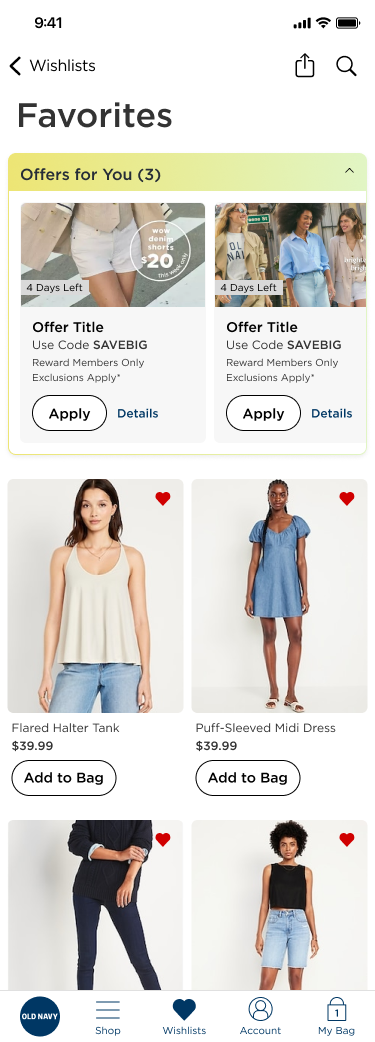
Algorithmic Nudges
Integrated a "Relevant Promotions" widget within the list view to trigger urgency when a favorited item goes on sale.
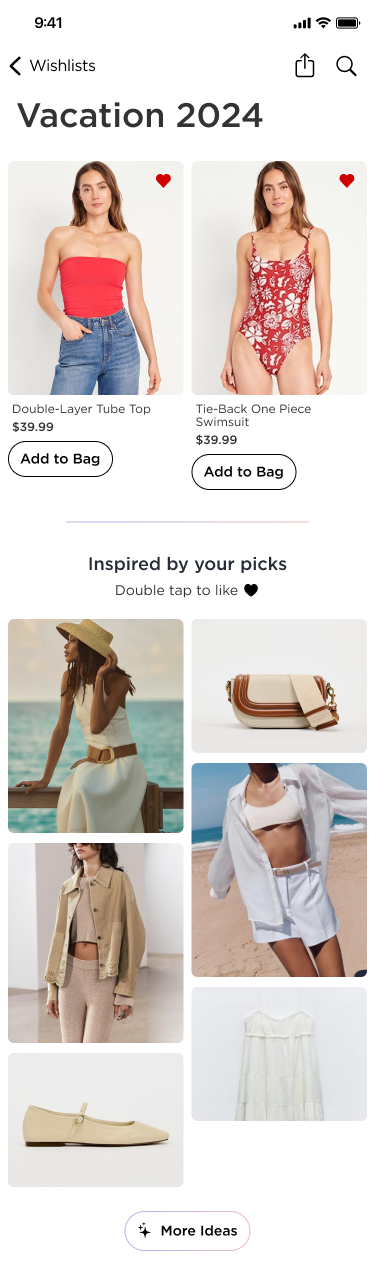
Social Micro-interactions
Implemented "double-tap to like" to gather soft signals for the recommendation engine without disrupting the browsing flow.
Closing & Strategic Impact
This Proof of Concept (POC) served as a catalyst for cross-functional alignment between Product, Engineering, and Marketing.
- Scalability: Designed with a modular framework, allowing features to be A/B tested and rolled out in phases.
- Cross-Platform Vision: While designed for mobile, the preference framework was built to persist across the Gap Inc. ecosystem, ensuring a unified customer identity.
- The Result: User testing validated a high appetite for "Curation Mode," signaling a shift in how our customers want to interact with the brand—moving from "searching" to "discovering."